32A9CCF9-9DC0-4266-93BE-F5536F7E01B9
Bangkok Bank recommends businesses prepare to adapt to a low-carbon economy, pointing out that market trends are changing, so the Bank is prepared to be a strategic partner to meet funding and knowledge needs, while emphasizing its role as ‘a trusted partner and reliable close friend”, moving together with customers as they transition to a new era
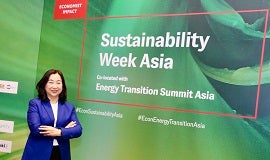
Bangkok Bank recommends businesses prepare to adapt to a low-carbon economy, pointing out that market trends are changing, so the Bank is prepared to be a strategic partner to meet funding and knowledge needs, while emphasizing its role as ‘a trusted partner and reliable close friend”, moving together with customers as they transition to a new era
Bangkok Bank recommends businesses prepare to adapt to a low-carbon economy, pointing out that market trends are changing, so the Bank is a strategic partner supporting funding and knowledge needs while leveraging the strengths of being a ‘leading regional bank’. The Bank aims to provide both capital and knowledge to help businesses transition to a green economy and sustainability while emphasizing its role as ‘a trusted partner and reliable close friend,’ moving forward together with customers as they transition to a new era. Bangkok Bank is also supporting the “Economist Impact: Sustainability Week Asia 2025”, highlighting the important role of Thai banks in Asia.
Bangkok Bank Director and Senior Executive Vice President Niramarn Laisathit gave an exclusive interview on the topic "Creating opportunities in the transition to a low-carbon economy – a banker's perspective," during the "Economist Impact: Sustainability Week Asia 2025" event organized by The Economist magazine. Ms. Niramarn stated that as environmental issues and climate change have become increasingly important, the transition to a green economy and new regulations will impact businesses, which will face multiple challenges such as market uncertainties and new environmental requirements. Therefore, the role of banks is no longer just as lenders but they must evolve into strategic partners that help support customers adapt to and proactively plan for this transition.
"Recently, we have witnessed various events, such as wildfires in the United States, flooding in Jakarta, heavy snowfall in Japan, and natural disasters in Thailand. In 2024, there were heavy rains and flooding in the North and South of Thailand, as well as droughts, all of which highlight that climate change is a significant issue that must be addressed collectively and seriously. Furthermore, there are regulations requiring businesses to reduce greenhouse gas emissions to maintain their competitive capabilities. Thailand has started implementing pricing mechanisms, such as excise taxes on fuels, and is drafting the Climate Change Act, which will include both mandatory measures like the Carbon Emission Trading System (ETS) and supporting measures like the Climate Fund, which will impact business operations. The transition may not just be a cost but an opportunity for those who can adapt quickly. The Bank must provide knowledge and support on these issues."
Ms. Niramarn added that Bangkok Bank has worked closely with customers by providing advice on business adaptation and addressing climate change to enhance competitive capabilities and drive businesses toward sustainability. The Bank has also offered loan products to help customers reduce carbon emissions, such as the "Bualuang Green Financing for Transition to Environmental Sustainability". This loan is designed to help businesses operate in an environmentally responsible manner and comply with new global trade regulations that emphasize sustainability, as well as domestic regulations that will be affected. Projects that can apply for this loan include the construction of green buildings, transitioning energy systems from fossil fuels to electricity, installing energy-efficient equipment, and wastewater treatment systems.
The Bank also offers the Bualuang Transformation Loan to help businesses adapt to the new era. This loan focuses on three key areas: Digital Technology, Green Energy, and Innovation, as well as sustainability-linked Loans. Business clients that achieve sustainability goals, such as reducing greenhouse gas emissions, improving energy efficiency, or reducing natural resource usage, will receive a reduced interest rate.
In addition to providing personalized advice to each client, the Bank continually organizes seminars and knowledge-sharing activities for business owners to help Thai businesses understand and prepare for changes in regulations and standards in various topics including reducing business costs with clean solar roof energy, energy efficiency: the first step toward Net Zero, Digital Transformation for SMEs: preparing organizations for the new era of ESG regulations, the era of sustainability: the adaptation of Thai agriculture, and more. For large businesses, the Bank also encourages the issuance of green and sustainability bonds, reflecting its commitment to being part of sustainable development across environmental, social, and governance (ESG) dimensions.
“Each company has its own approach to transitioning in the new era, which values businesses operating with sustainability. Thai businesses that prepare in advance will have an advantage, this is why Bangkok Bank aims to partner with customers to support Thai businesses to face the transition with confidence and create trade and investment opportunities. This aligns with our role as a ‘trusted partner and reliable close friend’ that stands by and supports customers to make the transition and seize business opportunities in the new era,” said Ms. Niramarn.
Regarding the "Economist Impact: Sustainability Week Asia 2025" event organized by The Economist magazine, Bangkok Bank is the only commercial bank to be a principal sponsor. This reinforces the role of Thai banks in the regional economic arena and emphasizes Bangkok Bank's commitment to sustainable development. At the event, besides showcasing Bangkok Bank’s vision as a ‘leading regional bank’ and delving into business development approaches to enhance sustainability on an international scale, the Bank also hosted a strategic discussion for clients. The session focused on updating the situation and exchanging ideas on maintaining business competitiveness in Southeast Asia amid rising tariffs and trade disruptions. The discussion featured Mr. Sebastian Eckardt, Practice Manager for Macroeconomics, Trade and Investment, East Asia and Pacific, World Bank, and Mr. Isada Hiranwiwatkul, Managing Director and Partner, Boston Consulting Group (Thailand) Limited (BCG).
bangkokbank:assets/news/news-category/2025
March 25, 2025
Read More
true