Bangkok Bank, a leading regional financial institution, hosted the second annual “The Great Green Transition” forum to keep businesses up-to-date with rapidly evolving global sustainability policies and trends. The forum highlighted three key issues relevant to Thai businesses: climate policy, energy innovation and sustainability, and corporate pathways toward an environmentally friendly future. Through providing insights and first-hand experiences shared by global business leaders, the event aims to support Thai businesses meaningful transition toward a green economy.
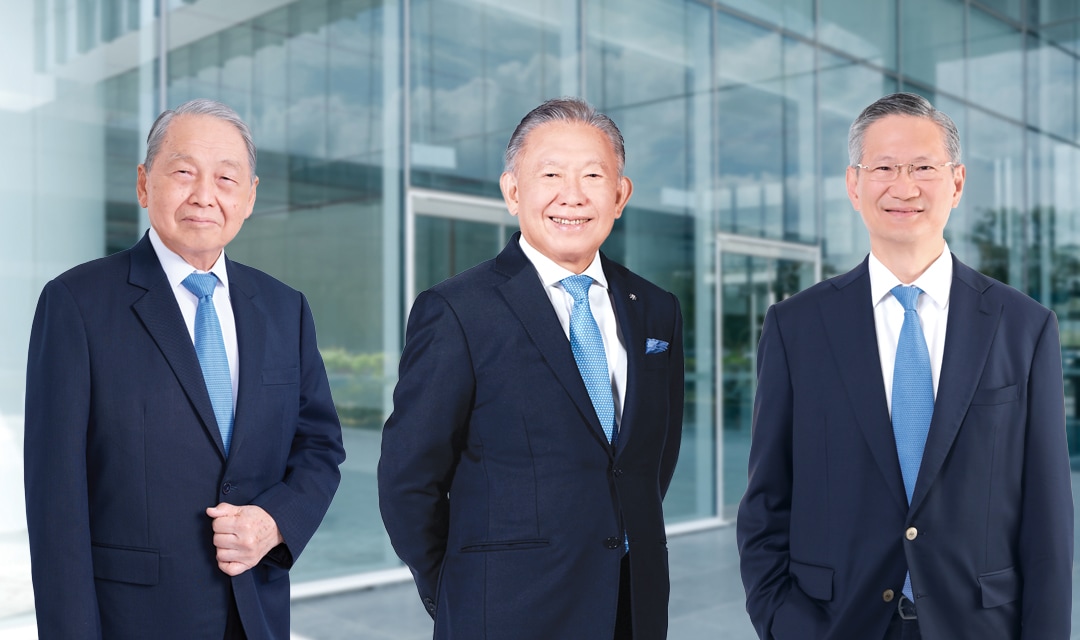
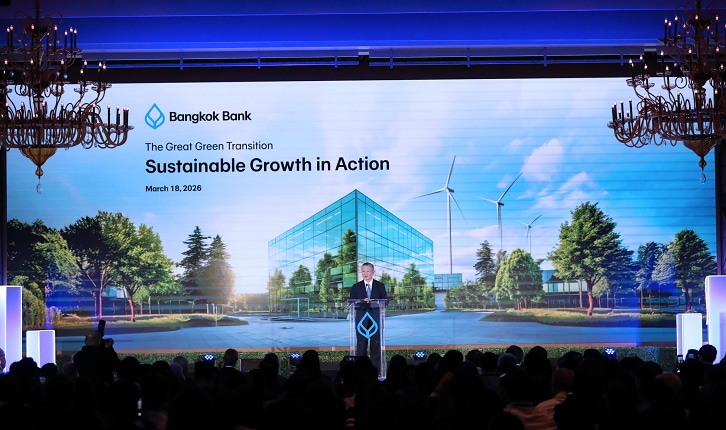
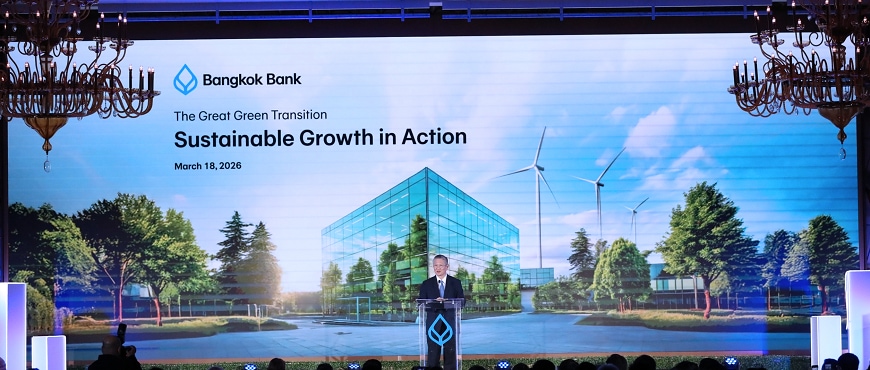
Bangkok Bank President Mr. Chartsiri Sophonpanich said at the opening of the second “The Great Green Transition” forum, held under the theme “Sustainable Growth in Action”, that this year’s event builds upon the Bank's "The Great Green Transition" event in 2025. It aims to elevate thinking and practical approaches that align with Thailand’s business context by focusing on three key areas: translating global climate policies into national-level implementation; driving innovations that transform energy and sustainability; and outlining corporate pathways toward an environmentally friendly future. These efforts are intended to empower Thai businesses to operate more sustainably and achieve an effective transition toward a green economy.
Since the beginning of 2026, ESG (Environmental, Social, and Governance) regulations have been enforced more rigorously, such as the European Union’s Carbon Border Adjustment Mechanism (CBAM), which officially came into force on January 1, 2026. The strengthened requirements covering regulatory enforcement, reporting, and green investment have had a direct impact on exporters to the European Union. Thai products affected by higher import tariffs include steel, cement, aluminum, fertilizers, hydrogen, and electricity, all of which are carbon-intensive sectors.
At the same time, other major economies, including Japan and China, have progressively introduced stricter environmental regulations, requiring companies to disclose environmental, social, and governance information. As a result, Thai businesses must accelerate their adaptation efforts, including investing in carbon-reduction technologies and establishing standardized greenhouse gas emissions reporting systems in order to safeguard key export markets and maintain credibility among global investors. This challenge extends beyond large corporations to include small and medium-sized enterprises, as well as producers in sectors such as agriculture. Environmental measures now define standards throughout the entire value chain, from raw materials and production to service delivery supported by product traceability systems. Companies that are unable to comply with these standards risk being excluded from exporters’ supply chains.
“As a trusted partner to Thai businesses, Bangkok Bank stands ready to support entrepreneurs in their transition to a green economy. This includes providing knowledge and insights through initiatives such as “The Great Green Transition” seminar series, which offers practical guidance that businesses can apply within their organizations to achieve tangible results, as well as the “Green Transition Academy” program designed to prepare business leaders for the low carbon era. At the same time, the Bank offers financial support through the “Bualuang Green Loan for Environmental Sustainability Transition, enabling businesses to adapt their operations and invest in the technologies needed for a smooth shift towards greener business models. Today, sustainability is no longer a voluntary choice, but an economic and trade imperative that all countries and businesses must respond to maintain competitiveness, unlock investment opportunities, and remain resilient in a rapidly changing global economy,” Mr. Chartsiri said.
The “The Great Green Transition” seminar featured a keynote speech on “Bridging Global Climate Policy into Local Business Reality” by Ms. Niamh Collier-Smith, UN Resident Coordinator in Thailand ad interim, UNDP Resident Representative in Thailand. The event also included a keynote speech on “Transformative Innovations Shaping the Future of Sustainable Business” by Mr. Ross Conlon, President and CEO of Siemens, who shared insights into regulatory frameworks affecting the business sector and modern innovations that help reduce energy consumption and greenhouse gas emissions.
A panel discussion titled “Driving Sustainability in the Era of Climate Change” featured Dr. Teerapon Tanomsakyut, Chief of Sustainability and Strategic Development Officer, Charoen Pokphand Group; Ms. Tongjai Thanachanan, Executive Vice President and Chief Sustainability and Strategy Officer, Thai Beverage; and Ms. Kornkamol Korpaisarn, Executive Vice President, Strategy, Business Development and Commercial Excellence, PTT Global Chemical. The panelists shared their experiences in managing projects to reduce greenhouse gas emissions, as well as insights into emerging trends and new opportunities in consumer markets that increasingly prioritize environmentally friendly and sustainable products and services. The session was moderated by Dr. Kobsak Pootrakool, Director and Senior Executive Vice President, Bangkok Bank.
The session titled “Building a Sustainable and Inclusive Future Through Innovation” featured Mr. Wachirachai Koonamwattana Chief Sustainability Officer, Siam Cement; Ms. Kanokwan Jitchobtham, Senior Vice President, Net Zero Solutions, Banpu NEXT; and Mr. Jirameth Achcha, Head of Corporate Services, Banpu. The speakers shared their perspectives on shaping the future and how innovation can support sustainable growth in partnership between organizations and local communities.
The event also featured exhibition booths showcasing innovations and projects focused on carbon reduction, supply chain management, and sustainability solutions. The “The Great Green Transition” seminar, held under the theme “Sustainable Growth in Action”, took place on Wednesday, March 18, 2026, at the Chatra Ballroom, Level 2, Siam Kempinski Hotel, Bangkok.